
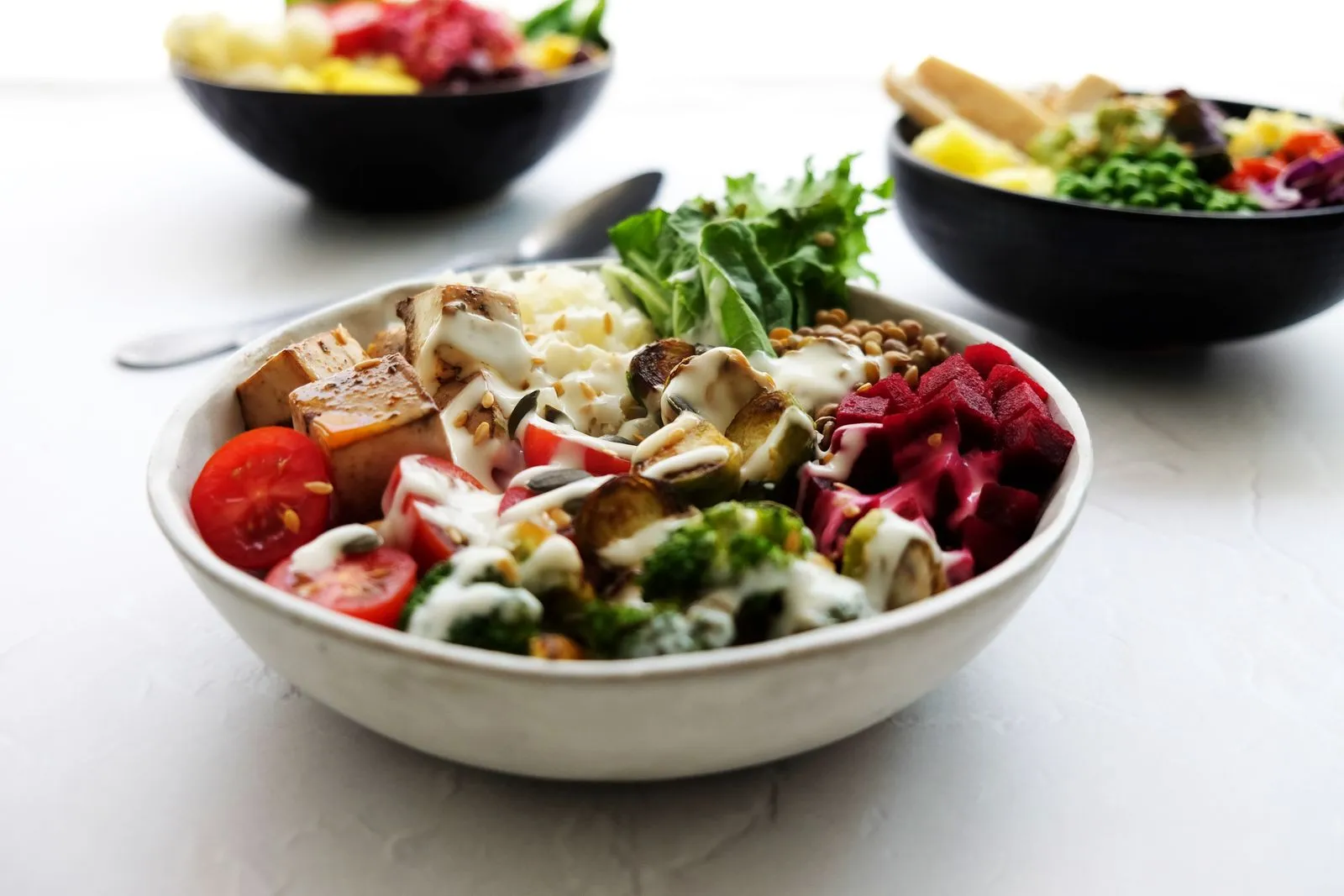
A balanced meal does not need special ingredients or complicated rules. Start by bringing together a few food groups: vegetables or fruit, a protein source, and a grain or other starchy food. Add a source of healthy fat for flavor and staying power. The mix can change with your appetite, preferences, and what you have on hand. With a little planning, the same approach works for a quick dinner at home or a lunch packed for work.
Start With a Simple Formula
Build the meal around vegetables or fruit, protein, and a grain or starchy vegetable. For example, pair roasted vegetables with chicken and brown rice, or combine beans, corn, tomatoes, and whole-grain tortillas. Aim to include several colors when it suits the meal, but frozen and canned produce can be practical choices too.
Portions depend on your needs, activity, appetite, and health. Rather than treating a plate guide as a strict rule, use it as a starting point: make vegetables a substantial part of the meal, include a satisfying protein, and add enough grain or starchy food to leave you comfortably full.
Choose Protein and Grains
Protein options include eggs, fish, poultry, tofu, beans, lentils, nuts, and dairy foods. Choose what fits your preferences and budget. A lentil soup with whole-grain bread, for instance, can bring protein and grains together, while a tuna and chickpea salad offers another practical combination.
Grains and starchy foods can include oats, rice, pasta, potatoes, corn, or bread. Whole-grain versions often add fiber, but there is room for different choices. For a quick home meal, serve eggs with toast and sautéed vegetables. At work, pack leftover rice with tofu and vegetables, then add a sauce separately.
Add Flavor and Healthy Fats
A small addition of fat can make a meal more satisfying and enjoyable. Try avocado, olive oil, tahini, seeds, nuts, or a dressing made with oil and vinegar. These ingredients also help carry flavor, so a simple bowl of grains, vegetables, and beans can feel like a complete meal rather than a collection of separate foods.
Use sauces, herbs, spices, citrus, and pickled vegetables to keep meals interesting. For example, add lemon and olive oil to a salmon and potato plate, or stir peanut sauce into a tofu and vegetable bowl. If you pack lunch, keep crisp toppings and dressings separate until you are ready to eat.
Make It Work on Busy Days
Prepare a few flexible ingredients ahead instead of planning every meal in detail. Cook a batch of grains, wash or chop vegetables, and keep convenient proteins such as canned beans, eggs, or yogurt available. Mix and match them through the week: beans can go into salads, grain bowls, soups, or wraps.
For a work lunch, pack a whole-grain wrap with hummus, chicken or beans, and crunchy vegetables, plus a piece of fruit. At home, combine frozen vegetables, quick-cooking noodles, and eggs or tofu in a skillet. If a meal misses one food group, add it at the next snack or meal rather than worrying about getting every combination perfect.
Think of balance as a flexible pattern, not a test each meal must pass. Combine produce, protein, and grains or starchy foods, then add flavor and fats in ways you enjoy. Start with ingredients you already use and make one small adjustment at a time. If you would like help tailoring meals to your needs, consider speaking with a qualified nutrition professional.